Wednesday, 13 November 2013

Differences between a storyboard and an animatic

Storyboard:
An array of sketches or pictures that represent the changes in action/plot in a piece of filming/ TV program. These images are predominantly accompanied by directions, dialogue exhibiting shots for films.

An example of a storyboard from http://www.storyboards-east.com/sb_coke.htm:


Animatic:
The initial interpretation of  a film  deriving form a storyboard through the use of film and added voice-overs and or music/sound effects.
Click here to find out more about animatics!


An example of an animatic I found here > http://www.storyboards-east.com/animat.htm

Monday, 4 November 2013

Audiences

ABC1s
http://www.abc1demographic.co.uk/

Audience Terms:
Passive; A passive audience also known as the audience effect is an audience who does not interact with media and is just injected with the messages, not intending to watch it. Source Passive

Active; An active audience interacts with the organization, issue, or cause. Instead of waiting to receive information on it, they seek it out from many sources and when doing so, they speak as well as listen.
Source Active

Monday, 21 October 2013

Juxtaposing our photographs to those of a film noir style including the conventional charcters

As an all girl group we were challenged to recreate all of the conventions so we decided to break some: we had female models representing both femme fatale and protagonist/antagonist...


Above the images are similar however within the school environment we were unable to create the same effect that the Venetian blinds have, although to keep the film noir style we used shadow to emphasize the femme fatale. The eye contact with the camera accentuates the femme fatale conventions since it instills a sense of impotence within the audience.


 The two iconic 'white dressed' pictures are similar though appearance and lack the eye contact which was in the pictures before. We haven't much mise-en-scene in the background like the image above which makes our recreation less effective on the audience. In our image I believe we fail to meet film noir conventions since location and props don't fit with the style and Lane's expression  isn't as demeaning as the character's above.


The photograph above is representative of film noir setting/location since it features an urban setting that looks slightly suspicious. The use of the shadow against the wall creates this suspicious effect, we have used a similar shadow effect to dramatize the situation. This shadow over Mol's face and the shadow against the wall creates enigma for the audience adding to the corrupt connotations of film noir.


Contrast is apparent in these two photos in addition to the conspicuous curves added to the image from sin city. Although not as obvious as the image above, our image holds a comparable likeness around the lips.


Below are a selection of other photographs taken in the style of film noir:


Beneath are a couple of images that I have edited on Adobe Photoshop.


The image of Lane above isn't successful at portraying conventions of a typical femme fatale in film noir because her expression is more frightened than confident,the angle also makes Lane look smaller and weaker accentuating her lack of confidence in this photograph.


This image uses the gun to distort the face, this blocks my expression, however the shadow works well against the white wall, this may have looked better cropped similar to the pictures below. Also this may ave looked better if my shadow emphasized the female form, especially if my facial features were shown on the shadow.


This is one of my favourite photographs that we have taken. The light effect was created through one of us holding a phone torch towards Mol. Simultaneously, I used my hand to create the bullet-like shape with the light. This shape focuses on the conventional femme fatale's red lips.


With this image I have cropped it so that the effect it creates is stronger focusing on my face .The shadow of the gun distorts my face, framing the expression given. The lack of eye contact shows impertinence of the femme fatale as well as the angle we have chosen to take the photograph from.

Research and critical theory: understanding narrative theory

Linear & Non-linear

  • Linear - Everything follows a chronological order; the story cannot jump past any stages only follow through one by one.
  • Cemetery Junction : this follows Levi Strauss' opposition theory, as well as Barthes' theory which suggests each action follows from the previous, and Propp's fairy tale theory since Freddie Taylor chases his childhood sweetheart (the princess)
  • Non-linear - Story-line doesn't follow chronologically, the plot can jump backwards and forwards in time.
  • Eternal Sunshine of the Spotless Mind : this follows Levi Strauss' theory of  opposition, this film also follows Propp's and Todarov's theories since it appears to leave an equilibrium that is disrupted and restored while simultaneously following Propp's theory about fairy-tales since Jaroel proceeds to chase Clementine who would fill the character of the princess.


Levi Strauss - Binary oppositions:
 Strauss (1908-2009) created a theory that suggesting : in order to have one independent state (e.g the antagonist - villain) you must have a perception of the opposite (Protagonist - hero) For your perception of the villain to be extremely negative you must have a comparison to somebody displaying positive actions.This is said to drive the narrative.

Tzvetan Todorov - The concept of equilibrium and disequilibrium:
Todorov (From 1939) introduced the theory surrounding the equilibrium. The equilibrium is the normal state that the narrative starts off with, this is disrupted usually by the antagonist, this creates an adventure/journey for the protagonist to restore the former equilibrium, to be followed by a climax and ending with the new equilibrium.

Barthe - Actions and Enigmas:
Barthe's theory presents the theory that in some films the narrative is directed through the actions, one thing happens, which causes the next to happen. Although Barthe's theory also suggests that the enigma can drive the narrative by making the audience wonder what happens next.

Vladimir Propp - Fairy-tales:
Propp indicates that narrative is character driven, that it thrives on the characters present and the actions they pursue.

Examples of Characters from Goldfinger (1964)

The hero, the one who is on a mission, usually to save someone or something (The protagonist)
Example : James Bond


The villains,characters that prevent the hero from completing his mission, usually the cause of the mission (The Antagonist)
Example: Auric Goldfinger and Oddjob


The Doner, the character who tries to help the hero, usually by giving something up.
Example: Tilly Masterson


The Dispatcher, the character who sends the hero on a quest.
 Example: "M"
The Princess, a stereotypical persecuted maiden.
Example: Jill Masterson

The Helper, also known as the 'sidekick' who aims to aid the hero.
Example: Jill Masterson
The False Hero, a character who appears to be good but tricks the hero with bad advice.
Example: (More of a False Villain) Pussy Galore
Sometimes the Princess' Father is included, who usually rewards the hero usually with his daughter.


Monday, 30 September 2013

Conventions of a film noir


Prezi on Film Noir conventions

Overall this Prezi describes some of the notable conventions of Film Noir however these can vary and more or less can be used at any given time.

Research Textual Analysis

Facts and links about Double Indemnity (Billy Wilder) :

http://www.imdb.com/title/tt0036775/
http://www.bfi.org.uk/distribution/double_indemnity


Double Indemnity Promo for TCM from sofia Wahlin on Vimeo.


  • Released in the USA on 24th April 1944
  • The estimated budget was $927,262
  • Double indemnity is an payout of double the life insurance if policy holder dies in an accident

  • It comes under the genre of film noir, it is a black an white film
  • Two of the main cast are Barbara Stanwyck and Fred Macmurray
  • It was based on a book

Thursday, 26 September 2013

What does the term film noir mean?

Film noir, simply translated as black film from the french term, describes the genre of film's characteristics as dull in colour consisting of mainly black and white tones, low-key lighting, usually as well as containing a corrupt/shady plot environment and characters.


The film noir style in classic movies refers to a series of downbeat, gritty crime and action movies made in the 1940s and 1950s. These movies used a shadowy, moody visual style that was inspired by European movies of the 1920s. Their visual style both set a mood and concealed the film's usually small budgets. Actor Robert Mitchum, who became a screen star via his many film noir roles, once quipped that the technicians "lit the movies with their cigarette butts."


Here is a poster for Arthur Lyons' most recent film noir festival.


    Origins of Film Noir from FilmmakerIQ.com on Vimeo.

a type of crime film featuring cynical malevolent characters in a sleazy setting and an ominous atmosphere that is conveyed by shadowy photography and foreboding background music
Definition Reference


From looking at these presentations I have learnt some of the history leading to the generation of noir films, as well as the conventions such as negativity darkness and seediness that will develop my own film noir OTS. I hope to keep the characters representations and dialogue simple but enigmatic to accentuate the noir themes, I will include some action possibly the traditional act of murder commonly found in noir films.

Monday, 23 September 2013

Reviewing class sweded films

What I have learnt from today's lesson;
Reviews of Class Sweded films from Eloise19

Over all I have learnt that in my sweded film I have missed vital elements which could have improved my overall feedback.

Sunday, 22 September 2013

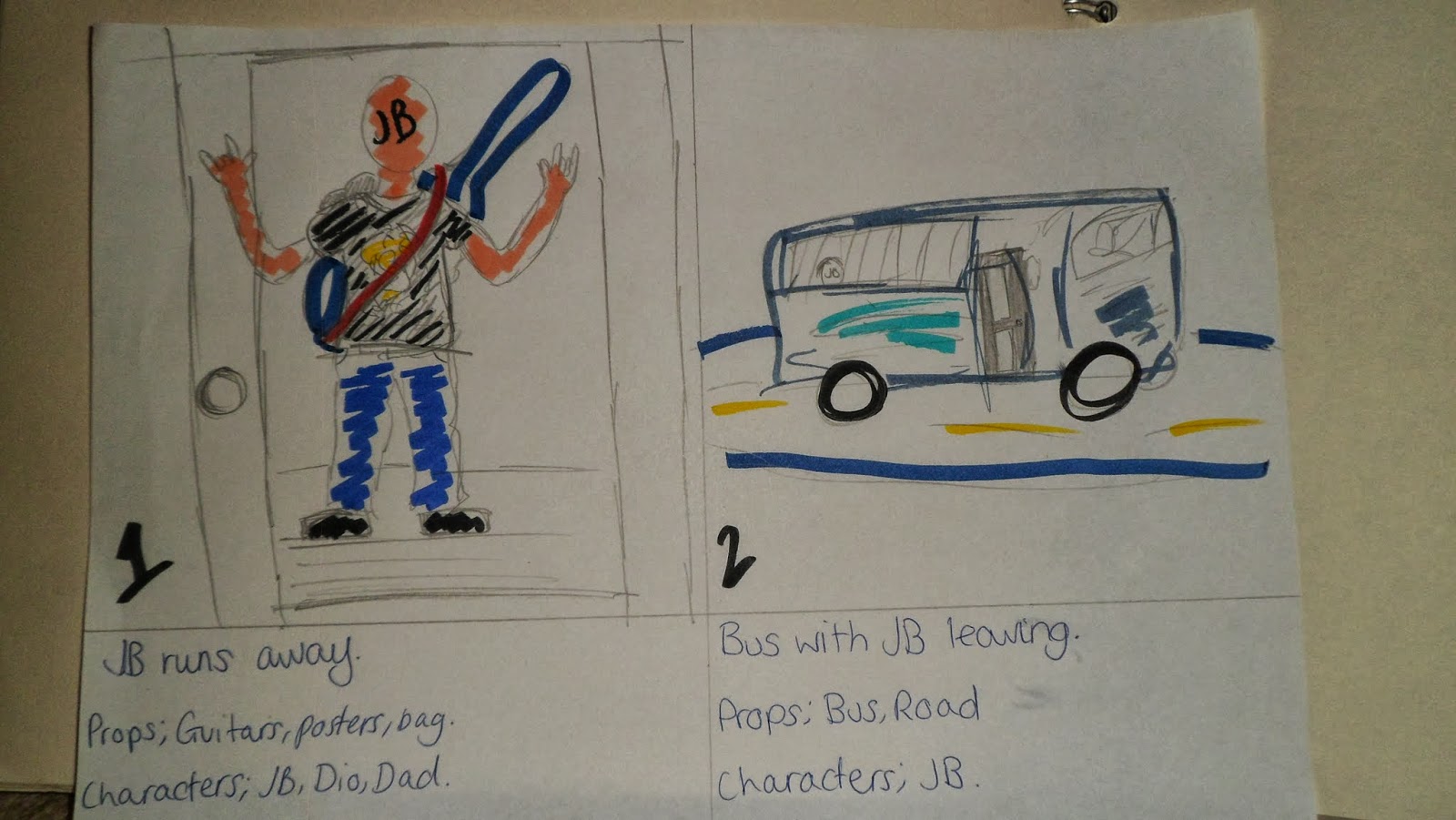
Mediocre Planning and storyboard for my sweded film


Initial Plan


Story board


Below is my final product: I am
aware that credits are missing, therefore making it an unsuccessful film.


Saturday, 21 September 2013

What is "Sweding" ?


Basic Definition :

Re-making something from scratch using whatever you can get your hands on.


The concept of "sweding" comes from the 2008 film 'Be Kind Rewind' it is the idea of recreating something that has already been made if it has been lost. For example in the film they have ruined all of the video tapes and have to recreate the films without big budgets or a lot of time therefore usually limit the films to around 5 minutes and use stuff they can make or find.


A website that is dedicated to the concepts of sweded films is swededfilms.com


An example of a sweded film :
Sweded Back To The Future from Billy Chase on Vimeo.


References:http://www.urbandictionary.com

Analysis of Scott Pilgrim Vs. the world

I have looked at the opening title sequence and the end credits of the 1995 film se7en; this is my analysis from what I have read and watched about the opening title sequence. I have included the relevant links below:

What conventions of an opening title sequence are being met in the opening title sequence of Scott Pilgrim vs. the World?

 Many conventions of an opening title sequence are included in this title sequence such as; using an opening scene, using sound effects to enhance the sequence,crediting the film company (See image 1),crediting the producer and production company (See images 2),title of the film (See image 3), credits to the main actresses and actors (See image 4), music (See image 5), credits to director and other key crew members (See image 6), use of special effects and significant props (see image 7), and towards the beginning a small amount of narration over text (See image 8) Another convention at the very beginning of the clip that is common is the logo of the film company (See image 9)

                                (Image 1)                              
(Image 2.1)
(Image 2.2)
(Image 3)
(Image 4)
(Image 5)
(Image 6)
(Image 7)
(Image 8)
(Image 9)


What conventions of an opening title sequence are being challenged?
This opening title sequence has a considerable amount of conventions that are challenged; we find that the logo crediting the film company has been edited to look old a pixelated accompanied by 8-bit music to give it an edgy game-like feel portraying surrealism (See image 9), also there is an unusual introduction/briefing on the main characters (See image 10), uncommonly there is text emphasising sound effects, music and speech (See image 11), atmosphere is presented very differently in this opening title sequence as the is a lot of bright painted colours and business in the credits, usual due to it heritage the opening title sequence includes a reference to the manga series (See image 12). Overall it gives less away than most opening title scenes since it hints to the style of film but not the plot.

(Image 10)
(Image 11)
(Image 12)


Overall in comparison to Se7en this opening title sequence breaks the boundaries in a similar way however the style in which it has been done is entirely different especially between genre and special effects. In se7en it was credited to have been given "analog warmth and randomness which may have otherwise been cheapened by digital effects." Where as in Scott Pilgrim Vs. the World there was a lot of perfectionism and they even made a mood-film before creating the full sequence (which can be found on the top link) "The shot took about 20 takes to nail and was shot on the second day of filming, a good ambitious set up to start with." this shows how much effort was put into every aspect of the title sequence especially as if you read on they explain that they had created the room to fit the 50ft technocrane in to film the giant room out on the living room scene.


Original analysis of Se7en

I have looked at the opening title sequence and the end credits of the 1995 film se7en; this is my analysis from what I have read and watched about the opening title sequence. I have included the relevant links below:
http://www.artofthetitle.com/title/se7en/
http://letterboxd.com/film/se7en/reviews/by/activity/

What conventions of an opening title sequence are being met in the opening title sequence of se7en?

This opening title sequence does include key conventions of opening title sequences such as; showing which production company was used, in this case New line cinema (See image 1), credits such as producer (See image 2), director (See image 3) and  the major actors/actresses in the film (See images 4 & 5), the title of the film (See image 6), music (See image 7), and other major crew members, as well as significant elements such as the note-books which set the atmosphere (See image 8), and a prelude (although this hasn't been expressed in the video i have read in the information below that a prelude was shown before the opening title sequence).


(Image 1)
(Image 2)
(Image 3)
(Image 4)
(Image 5)
(Image 6)
(Image 7)
(Image 8)


What conventions of an opening title sequence are being challenged?

The elements of the opening title sequence of se7en that are challenged are; on the special effect side of things, the opening title sequence was put together by hand rather than through digital editing which was common at the time "Cooper and his team opted to assemble the majority of the sequence by hand, giving it an analog warmth and randomness which may have otherwise been cheapened by digital effects. " This shows the emphasis on how the opening title sequence is important since a lot of time and effort has been put in to create it to perfection. Also the opening title sequence chosen is without full appearance of the characters only a hand and important props, leading to mystery and deep thought.


."the opening sequence is considered one of the most innovative of its era". Discuss how true you think this statement is (max 200 words) using at least one quote:

Over time this opening title sequence has been reviewed as a radical opening title sequence, receiving reviews such as "90% of horror films nowadays get no where near as creepy or lurid as even the credit sequence of Seven." and "Seven without a doubt has not only one of the best opening credits, but one of the best endings in any film." These reviews reveal the impact on not only the past 18 years but the present day too. Since all of the quoted reviews from http://letterboxd.com/film/se7en/reviews/by/activity/ I have used are from the year 2013. It is also referred to on http://www.artofthetitle.com/title/se7en/  as an influential Opening title sequence "its impact on the title industry is still felt almost two decades on, both as a legacy and in the countless knock-offs it has inspired over the years" This quote indicates that many people used intertextuality as a form of paying their respects to this title sequence.